
Criminal Cases in Marion County Courts
Marion County criminal court cases are divided by court function. Superior Court, part of the six-county Chattahoochee Judicial Circuit, tries felonies and keeps accusations, indictments, pleas, judgments, and sentences. Magistrate Court considers warrants, private warrant applications, first appearances, preliminary hearings, bonds, county ordinances, and bad checks. Probate Court handles county traffic citations issued by the sheriff or Georgia State Patrol. Juvenile Court records follow separate confidentiality rules.
The Superior and Juvenile Court clerk is the custodian for those court files. A police report, jail booking sheet, and GCIC history answer different questions. The clerk's docket shows what prosecutors filed and how the judge resolved it. That distinction matters when an initial booking charge later changes, is dismissed, or becomes an indictment for another offense.
Marion Superior Clerk Access
Call the Superior and Juvenile Court clerk at 229-649-7321, fax 229-649-7931, or email joy.smith@gsccca.org. Give a case number when known. Otherwise provide the party name and an approximate filing year, then ask which electronic index or archive applies. Request the docket and disposition before ordering every pleading. Those two records usually identify the useful orders and keep copy costs focused.
Superior and Juvenile Clerk
100 Burkhalter Avenue
Buena Vista, GA 31803
229-649-7321
The official clerk page shown here confirms the local criminal-filing role.
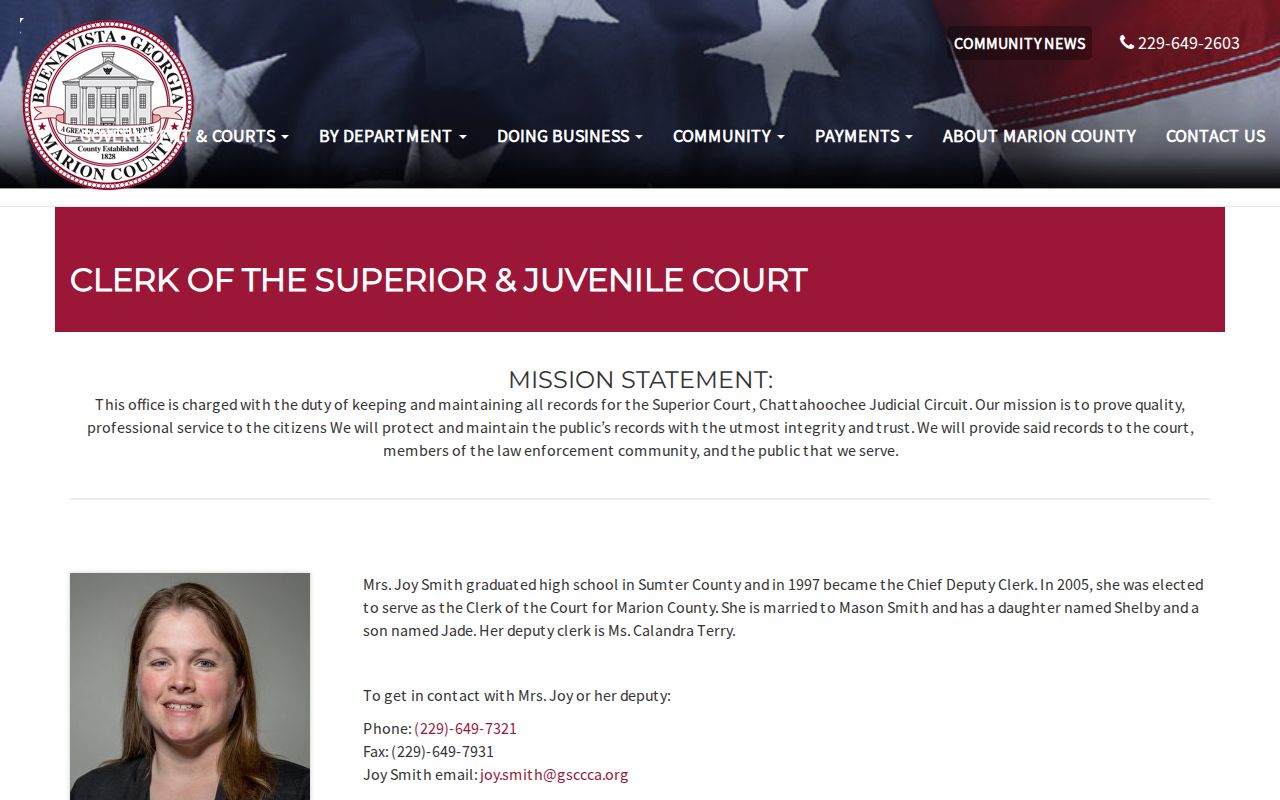
Its contact details are the dependable fallback when an online index does not expose a Marion County case.
How to Search Marion County Case Records
Georgia has no verified comprehensive public name-search portal for Marion County criminal court cases. Use the clerk workflow instead:
- Identify whether the matter is a Superior, Magistrate, Probate, or Juvenile Court file.
- Call or email the custodian with the case number, or a name plus approximate year.
- Ask which index and electronic or archived format covers that period.
- Request the docket and final disposition, then select needed pleadings or orders.
- Confirm current copy costs and request clerk certification when proof of the outcome is needed.
For warrants or first appearance records, contact Magistrate Court at 229-649-5542. Use the same number for Probate Court traffic files, whose published phone hours are 8 a.m. to noon and 1 p.m. to 5 p.m.
| Lookup detail | How to supply it | Why it helps | Local limit |
|---|---|---|---|
| Case number | Exact clerk number | Best match | May be unknown |
| Party name | Full legal name | Index fallback | Common names need a year |
| Filing year | Approximate range | Narrows archives | Not a required web field |
| Court type | Superior, Magistrate, Probate | Routes the request | Files are separate |
PeachCourt Is Not Open Search
The state provider table indicates PeachCourt availability for Marion Superior Court, but e-filing is not the same as a free public criminal-case lookup. An account is required to start a filing, and the provider does not replace the clerk as record custodian. Treat the service as a filing channel, not proof that every docket or document can be searched without an account.
The Probate and Magistrate Court page also shows why court selection matters.
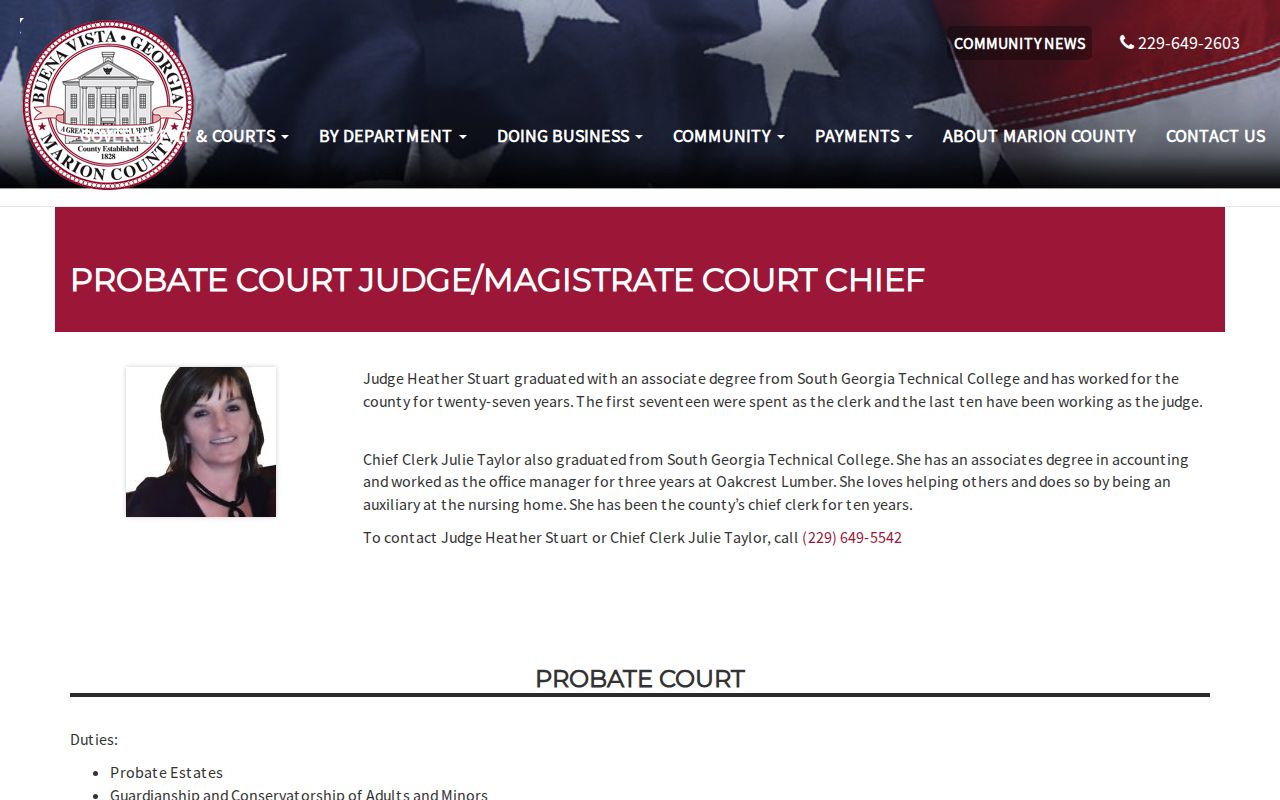
It routes warrant, bond, preliminary, and traffic questions that do not belong in the Superior Court clerk's felony file.
What Marion County Case Files Show
A Marion County criminal case file records the judicial path after a charge reaches court. Read entries in date order and distinguish allegations from final rulings.
| Case number and court | Identifies the court division and file. |
|---|---|
| Charging document | An accusation or indictment states the charge formally filed. |
| Docket entries | Chronological list of filings, hearings, and orders. |
| Hearing dates | Arraignment, motions, calendar calls, plea, or trial settings. |
| Disposition and judgment | Shows conviction, dismissal, acquittal, nolle prosequi, or another result. |
| Sentence and conditions | Records confinement, probation, fines, restitution, or other terms. |
A certified copy is authenticated by the clerk. It carries more evidentiary weight than a screenshot or a public felony-search match. Marion County has not posted a local copy or certification fee schedule, so ask before ordering.
Read Marion Dispositions Carefully
Disposition terms are not interchangeable. A nolle prosequi means the prosecutor formally declines to continue a charge. A no bill means the grand jury did not return an indictment. An acquittal follows a not-guilty decision, while a dismissal ends the charge through a different path. A dead docket pauses a prosecution and removes it from the active docket; it is not an acquittal.
- Accusation
- A prosecutor's formal charging document used where Georgia law permits filing without indictment.
- Indictment
- A formal felony charge returned by a grand jury.
- Arraignment
- The appearance where the filed charges and plea are addressed.
- First Offender
- A Georgia disposition that may avoid a conviction after successful discharge when the person qualifies.
Always read the signed judgment or disposition beside the docket label. Short index text can omit conditions or later orders.
Older Marion Dockets Need Focus
Older Marion County criminal court cases may live in paper volumes or an archive that is not visible through a current electronic interface. Start with a narrow request. Give the clerk the full name, an estimated year, the likely court, and any case number found on a notice or prior order. Ask whether a docket index exists for that period. The docket can reveal the case number, filing sequence, and final order without requiring staff to copy an entire file.
Once the correct entry is found, name the exact items needed. Common choices include the accusation or indictment, plea, sentencing order, dismissal, nolle prosequi order, or certified disposition. This approach is useful because Marion County has not published local search, copy, or certification prices. It also respects the Georgia Open Records Act rule that an office provides existing records but need not create a custom history from separate files. If the name search fails, check spelling changes and confirm whether the matter belonged to Magistrate, Probate, Juvenile, or Superior Court.
Stages of a Marion County Criminal Case
A local felony matter may begin with arrest or citation, then pass through a first appearance and bond decision. Magistrate Court may hold a preliminary hearing. The district attorney then reviews the evidence and may file an accusation or seek a grand-jury indictment. Superior Court handles arraignment, motions, calendar calls, a negotiated plea or trial, judgment, sentence, and any post-judgment filings.
Case flow: Charges Filed › Arraignment › Pretrial › Plea or Trial › Disposition › Sentencing
The Chattahoochee Judicial Circuit District Attorney serves Marion County, while the clerk records what is filed. A prosecutor's charge may differ from the jail's intake charge because review occurs after arrest.
CDX Tracks Reports, Not Defendants
The Judicial Council's Criminal Case Data Exchange dashboard is an administrative reporting tool. Its county, court, and agency filters describe data exchange coverage; they do not provide a public person-by-person docket search.
The CDX dashboard source illustrates that limited role.
Use it to understand court reporting infrastructure, then return to the Marion clerk for an individual case.
Marion Court Access and Restrictions
The Georgia Open Records Act favors access to existing public agency records, but it does not open every court record. Juvenile cases, sealed filings, victim identifiers, and protected investigative or safety material may be withheld or redacted. Under O.C.G.A. § 35-3-37, eligible GCIC history may be restricted and a court record may require a separate sealing process. Restriction does not mean physical destruction.
If a case is absent from an electronic view, contact the clerk about older paper records, spelling variants, and sealed status. Clerks can explain filing and copy procedure, but they cannot give legal advice.
Federal Cases Use Separate Dockets
Federal criminal matters from Marion County are filed in the U.S. District Court for the Middle District of Georgia. They do not appear as Marion Superior Court cases. PACER requires registration and applies its current federal fee schedule.
The PACER record system provides federal electronic docket access.
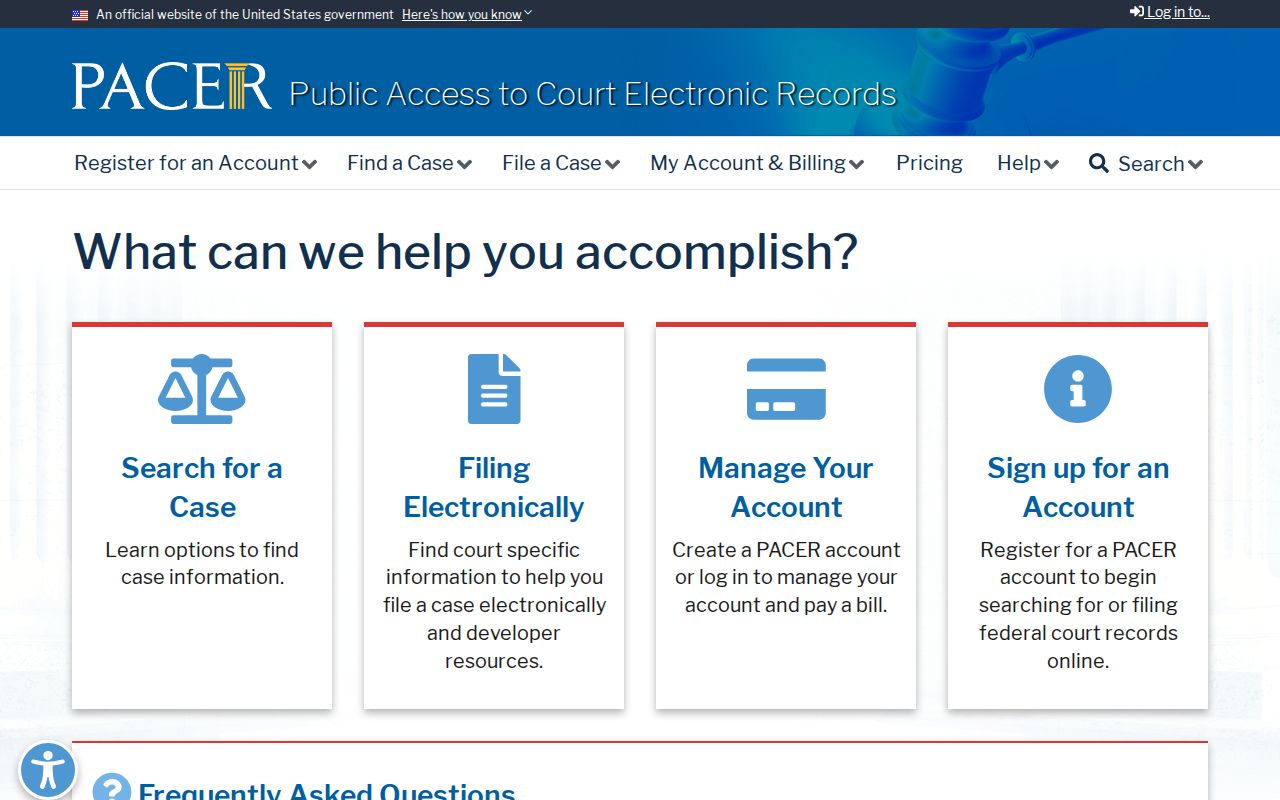
The docket identifies federal filings, while certified copies come through the federal clerk.
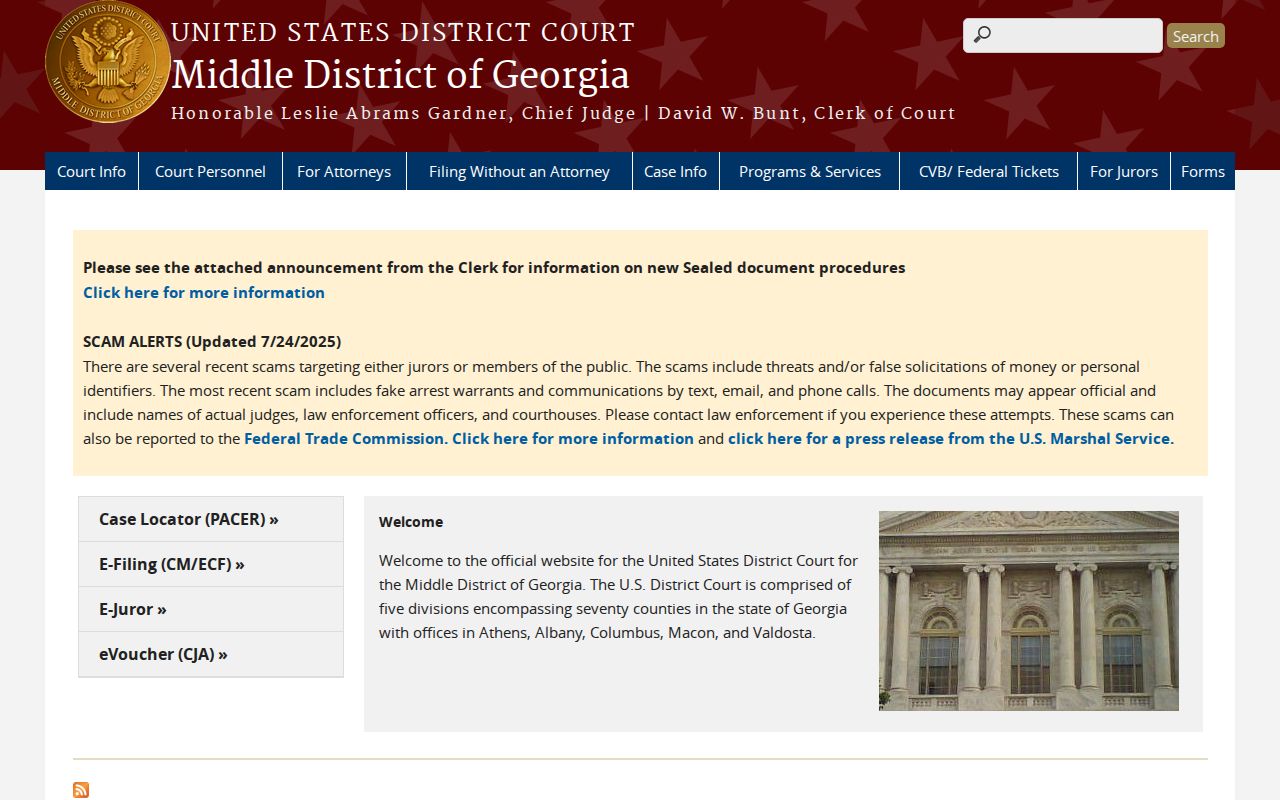
The Middle District of Georgia court site confirms the federal court serving Marion County.
This separate channel prevents a federal prosecution from being mistaken for a missing county case.