
Running a Marion County Sex Offender Check
The main public channel is the Georgia Bureau of Investigation Sex Offender Registry. It accepts name and location searches, including a county filter. Start with a full name when one is known. For neighborhood awareness, use Marion County, a Buena Vista address, or a ZIP search. Similar names make the photo, age, physical description, offense, and registered address important comparison points. The portal requires acceptance of its conditions because registry data can change and must be used within the law.
The Marion County sheriff supplies and checks local registration facts. The office does not publish a separate county map or local registry search in the researched sources. If a profile has a doubtful Marion address or status, call the sheriff at 229-649-3841 rather than drawing a conclusion from the screen. For an out-of-state address or a person who may have moved across state lines, the national search adds a second channel. No single result replaces direct confirmation.
Marion Registry Conditions Come First
The GBI presents conditions of use before search tools. That step is more than a click-through screen. It warns that the registry reflects information reported by responsible agencies and may not show a person's current physical presence at a listed address. A registered address is a reporting field, not a promise that the person is there at the moment of a search.
Read the conditions, accept them, and treat the result as a lead for careful safety planning. The National Sex Offender Public Website also explains that participating jurisdictions control their own records. Search both systems if the location history crosses Georgia's border. Contact law enforcement about an urgent threat; use the Marion sheriff for a routine local data concern.
Note: A blank search can reflect spelling, location, eligibility, timing, or jurisdiction differences rather than proof that no registration record exists.
Searching the Georgia Sex Offender Registry
The Georgia Sex Offender Registry provides name, county, city, ZIP, address, and proximity-style controls through its current interface. A county search is useful for a broad Marion view, while an address and radius search is better for a defined area. Search terms should be widened when an exact query fails. Try a last name alone, confirm spelling, clear old filters, and then switch to location fields.
- Open the GBI registry and read its public-use conditions before accepting them.
- Choose a name search or select Marion in the county field. Location searches can use city, ZIP, address, and radius controls.
- Compare the result list by photo, name, aliases, age, and address. Do not rely on a name alone.
- Open the profile and review the offense, conviction jurisdiction, registration status, addresses, and supervising or registering agency.
| Field Label | Type | Required | Notes |
|---|---|---|---|
| First Name | Text | No | Used for a name search. |
| Last Name | Text | No | Useful alone or with a first name. |
| County | Select | No | Select Marion to localize Georgia results. |
| City / ZIP | Text or select | No | Narrows results by place. |
| Address / Radius | Text and select | Conditional | Address supports a proximity search; confirm live radius choices. |
Correcting a Marion Registry Address
A reported address can be old, incomplete, or recently changed. Georgia requires registrants to report specified changes, but the state system depends on agency reporting. The Marion sheriff is the practical first contact when a local address looks wrong. Give the profile name, the address shown, and the reason for the concern. Do not confront the person at the property.
Marion County Sheriff
338 Geneva Road
Buena Vista, GA 31803
229-649-3841
Local registration questions, verification concerns, and suspected address errors.
The GBI registry FAQ and state portal remain the source for statewide display questions. The sheriff can review the local registration record and route information through the proper law-enforcement channel. If the issue involves immediate danger, use emergency services. A routine mismatch should go through the office phone rather than social media or neighborhood confrontation.
What a Marion Registry Profile Shows
A public profile joins identity, location, offense, and registration facts. It can list a name and aliases, photograph, sex, race, age or birth information as allowed, height, weight, hair and eye color, and identifying marks. Location fields may include primary and added registered addresses. Some profiles also publish vehicle information. These fields help distinguish people with similar names, but each field should be read as part of the whole record.
| Name & Aliases | Published identity names used to compare a result. |
|---|---|
| Photo & Physical Description | Photo, sex, race, height, weight, hair, eyes, and marks when published. |
| Registered Address | Primary and additional reported addresses and county. |
| Offense | Qualifying offense description, conviction date, and conviction jurisdiction. |
| Classification | Risk classification when the reviewing board has assigned one. |
| Registration Status | Current published status and supervising or registration agency. |
Marion Registry Versus NSOPW
The Georgia registry is the direct source for records maintained through Georgia agencies. It offers the Marion County filter and the fuller state profile. NSOPW is a national federated search, which means it sends a query across participating jurisdictions. That makes it useful when a person lived elsewhere, travels between states, or cannot be found with a Georgia-only location search.
Use the systems in sequence. Search Georgia first for a Marion address, then repeat the name and location through NSOPW. Compare results with the source jurisdiction named in the profile. Differences may reflect update timing, legal eligibility, or how each jurisdiction publishes data. The national result should lead back to the jurisdiction that owns the entry.
The NSOPW search source illustrates that cross-state layer.
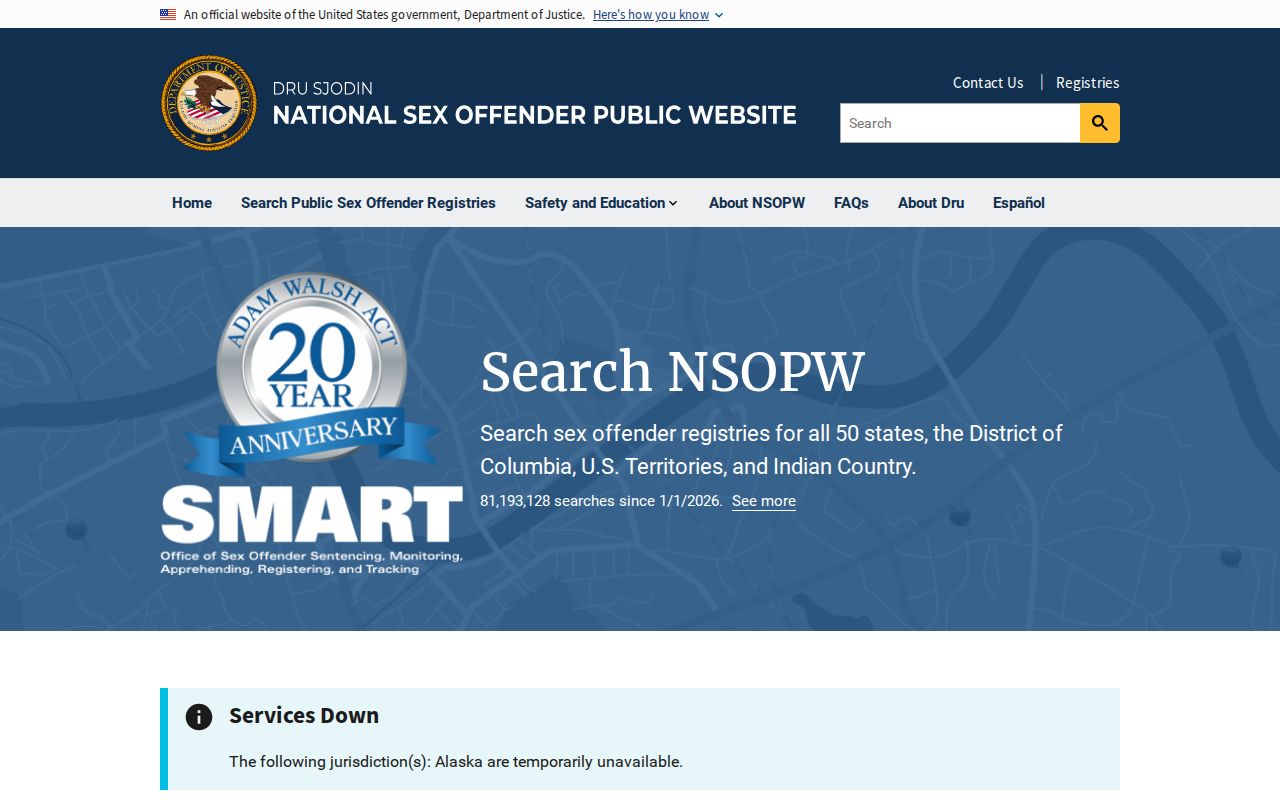
Its broad reach is useful after the Marion and Georgia filters have been checked.
Registration Levels in Georgia
Georgia's Sex Offender Registration Review Board uses Level I, Level II, and sexually dangerous predator classifications for risk assessment. Those labels should not be confused with a simple federal tier chart that automatically sets a 10-year, 25-year, or lifetime term. Georgia registration is generally lifetime, subject to the relief routes and eligibility limits stated in state law. Classification and registration duration answer different questions.
| Level / Tier | Duration | Verification Frequency |
|---|---|---|
| Level I | Georgia registration is generally lifetime unless lawful relief applies. | Annual birthday-period verification applies to ordinary registrants. |
| Level II | Georgia registration is generally lifetime unless lawful relief applies. | Annual birthday-period verification applies to ordinary registrants. |
| Sexually Dangerous Predator | Lifetime registration, subject to governing law. | Annual verification plus an additional six-month verification. |
Marion Registration Reporting Clock
Georgia imposes short reporting windows after release, entry into the state, and changes to required registration facts. The research identifies 72-hour duties for covered events. That clock explains why the sheriff's registration role matters: local data must be gathered, checked, and sent into the state system. It also explains why a recent move may create a timing gap between real-world events and the public screen.
Ordinary registrants verify during the birthday period each year. A person classified as a sexually dangerous predator has the annual check plus another verification six months later. The sheriff performs quarterly address verification duties under the state framework. Those schedules are compliance controls, not a guarantee that every public field updates at the exact instant a change occurs.
The Georgia General Assembly's published laws provide the governing statutory context.
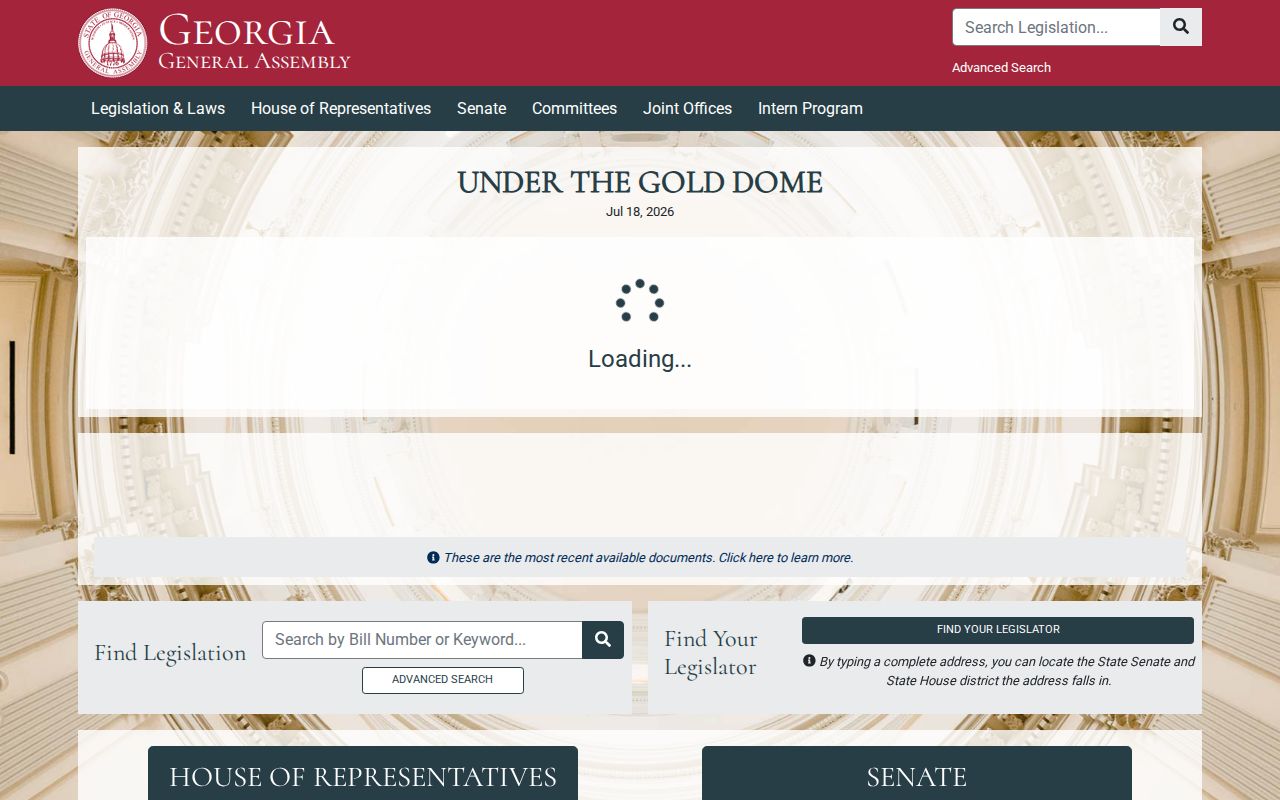
The current code should be checked whenever a duty, deadline, or relief question has legal consequences.
Note: Verification frequency and public classification are related controls, but neither should be used to predict a person's future conduct.
When a Marion Name Is Missing
An expected name may fail to appear for several reasons. The spelling may differ, an alias may be used, the person may be registered in another county or state, the record may be awaiting an update, or the offense and adjudication may not create a public Georgia listing. Juvenile adjudication does not automatically mean a public registry profile. Never fill the gap with rumor.
Clear all filters and search broader name forms. Try the Georgia location controls, then repeat the search through NSOPW. If a specific Marion registration is expected, call the sheriff with enough detail to identify the concern. The office can receive a report, while the GBI controls the statewide portal. A court file or general criminal history is a different record and should not be treated as a registry substitute.
Lawful Marion Registry Use
Public registry information supports community awareness and practical safety planning. A careful searcher checks the source, confirms the right person, and reports a suspected data problem to the sheriff. The record does not authorize threats, intimidation, vigilantism, or pressure against a registrant or anyone in the household. It also does not replace a police report about present conduct.
Use registry data lawfully: Georgia warns that using registry information to harass, threaten, or intimidate a registrant or the registrant's household is a crime. Report safety concerns to law enforcement instead.
The official registry remains the starting point for Marion County community notification. Its profile details should be read with the portal's accuracy limits in mind.
The GBI registry interface shows how Georgia publishes the searchable record.
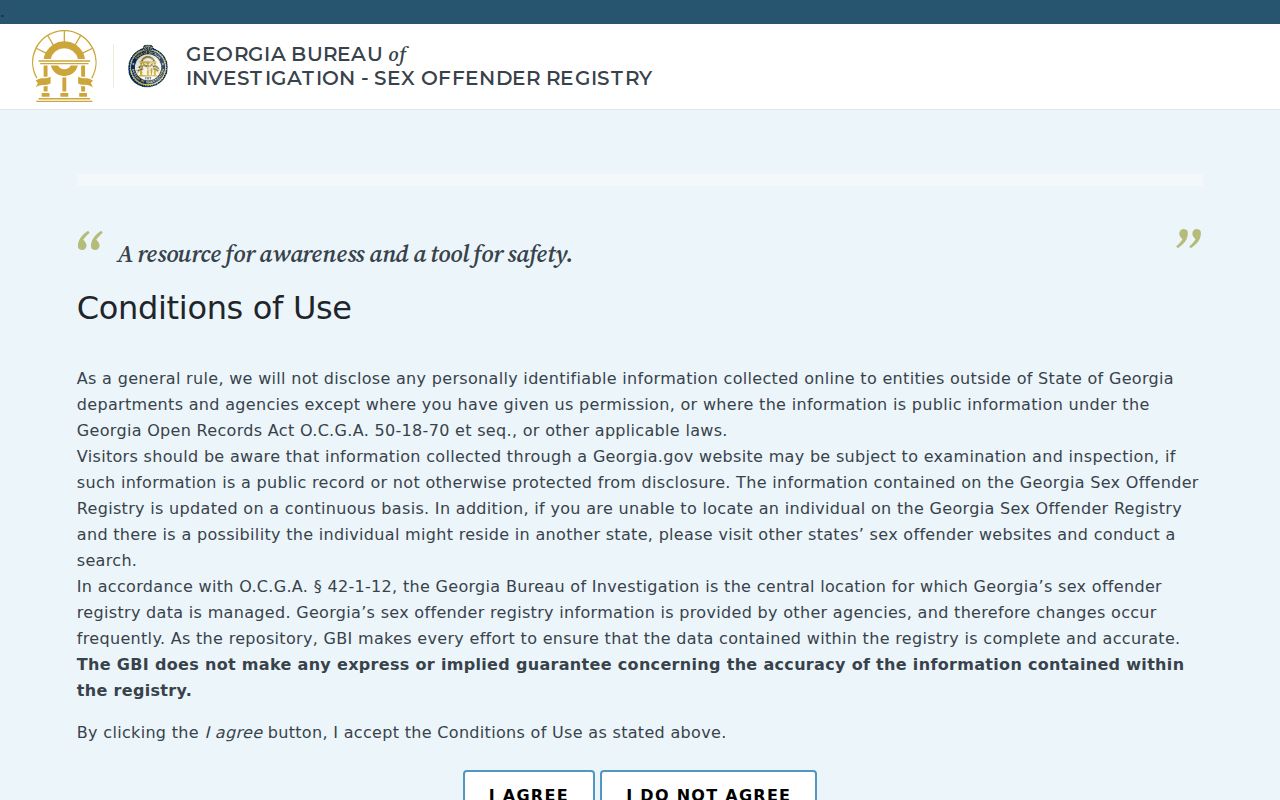
That official state source, paired with the Marion sheriff's local role, is safer than copied or stale third-party data.